
Luke 19:1-10 (NIV)
Jesus entered Jericho and was passing through. A man was there by the name of Zacchaeus; he was a chief tax collector and was wealthy. He wanted to see who Jesus was, but because he was short he could not see over the crowd. So he ran ahead and climbed a sycamore-fig tree to see him, since Jesus was coming that way. When Jesus reached the spot, he looked up and said to him, “Zacchaeus, come down immediately. I must stay at your house today.” So he came down at once and welcomed him gladly. All the people saw this and began to mutter, “He has gone to be the guest of a sinner.” But Zacchaeus stood up and said to the Lord, “Look, Lord! Here and now I give half of my possessions to the poor, and if I have cheated anybody out of anything, I will pay back four times the amount.” Jesus said to him, “Today salvation has come to this house, because this man, too, is a son of Abraham. For the Son of Man came to seek and to save the lost.”
Remember Zacchaeus—the tax collector? How do you think people felt about Zacchaeus? Being a tax collector and chief of the tax collectors, he couldn’t have been admired, right?
Not only was Zacchaeus not admired, but the people hated him. Plus, he was short, and all that goes along with that “short man’s syndrome.” The goal of tax collectors in Rome at the time Jesus was passing through was simple. They were to gather money for the empire. However, as it pertains to their personal goal, that was simple too. Get rich! The deal Rome had with the tax collectors was that Rome let them keep any extra money they could force the people to pay. Enter hate. Although quite an unfair system to collect taxes, it was nevertheless quite clever. It worked like this:
The Bid: Rome sold the right to collect taxes in an area to the highest bidder.
The Goal: The tax collector paid a set fee to Rome first. His goal was to squeeze more than that amount from the local people to make a profit.
The Profit: Here’s the math: Say a tax collector owed Rome $100. He would charge the people $150. He got to keep the extra $50 for himself.
Clever? Legal? Cheating? Yes to all three. Due to this rule, tax collectors were able to use legal cheating methods to demand more money. They claimed this extra amount was fees for land, crops, and road tolls. The tax collector also knew exactly how much money their neighbors had. And, if a person couldn’t pay, then the tax collector might lend them the money. But, at a very high interest rate.
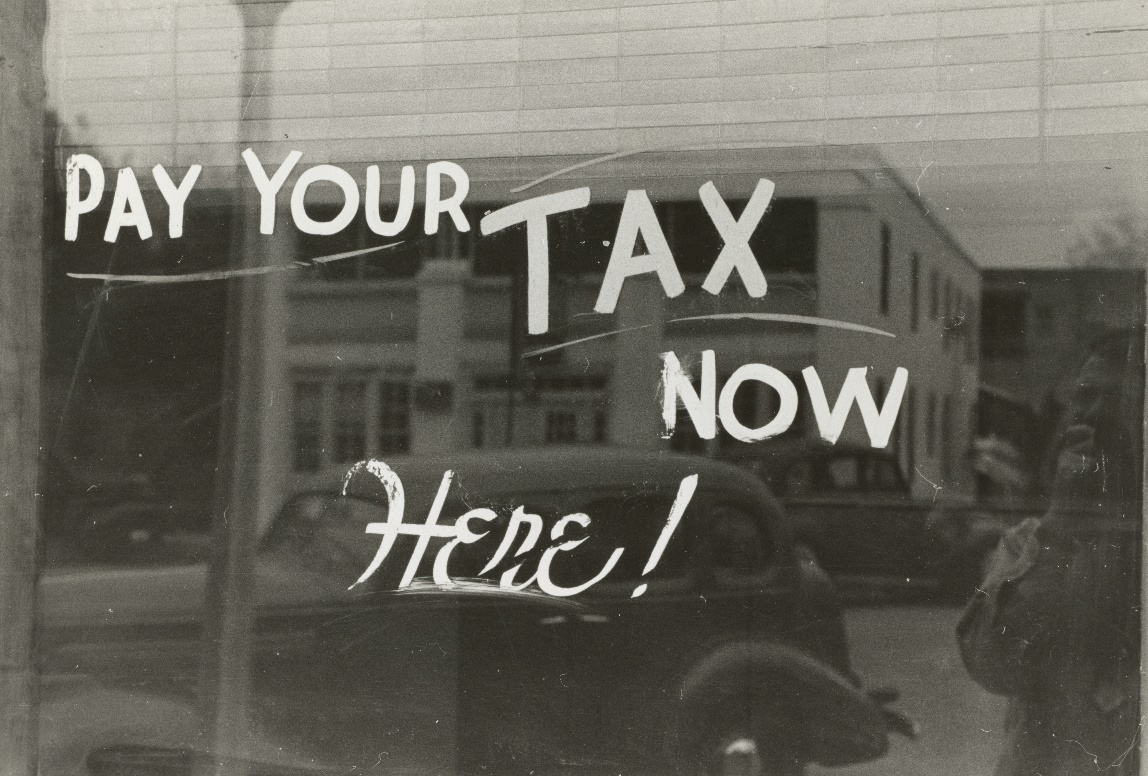
Photo by The New York Public Library on Unsplash
Due to this tactic, the Jewish people hated the tax collectors. The three biggest reasons being:
Traitors: The foreign Roman army controlled the land, and the tax collectors worked for them.
Thieves: To get rich, the tax collectors took extra money from their own friends and neighbors.
Unclean: As tax collectors, their work forced them to hang with foreigners, a/k/a Gentiles. This broke Jewish religious laws.
As we read in our scripture, Zacchaeus was also a Jew. As Jesus passed through Jericho, He spotted Zacchaeus, who had climbed a tree to get a look at Him. Being short in stature, that was the only way he could see over the crowd. When Jesus reached the spot, he looked up and said to him, “Zacchaeus, come down immediately. I must stay at your house today.” How was it that Jesus chose this person to spend the day with and have dinner? This guy who cheated his friends and neighbors. This guy that everyone hated.
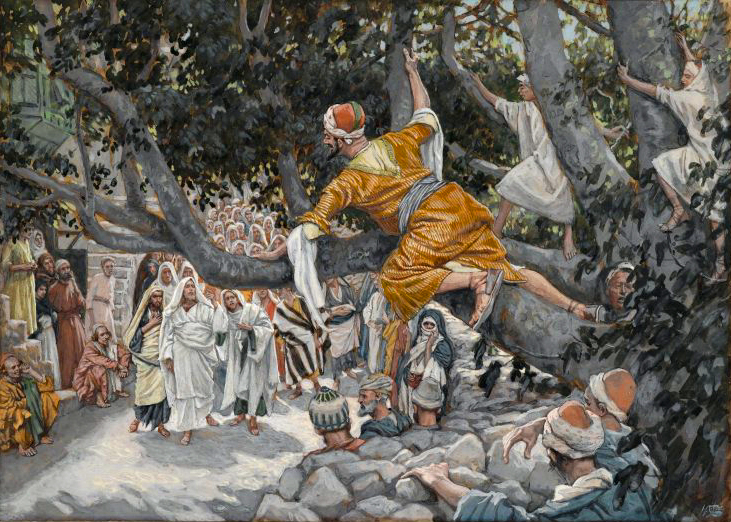
James Tissot, Public domain, via Wikimedia Commons
The people were upset that Jesus would even consider being with him and not with them. They were the ones devoted to him after all.
Why did Zacchaeus show up? Curiosity? Need?
Did Zacchaeus seek Jesus out or did Jesus seek Zacchaeus out?
How did Jesus see Zacchaeus?
How did Zacchaeus see himself?
The story of Zacchaeus is a good example of justifying grace. It’s the unmerited gift from God. It’s completely free. This gift is the forgiveness of sins. It declares you righteous in God’s sight, based entirely on the sacrifice of Jesus. Not by your own works. It’s a complete pardon that instantly reconciles you with God. We see this as Zacchaeus welcomed Jesus, repented, and then turned over a new leaf.
Whatever happened to Zacchaeus?
He made a vow to give half his money to the poor and to pay back anyone he cheated. So, did he do it? The Bible and The Gospel of Luke don’t record what happened to Zacchaeus. There are, however, a few theories out there as well as traditions about his future.
The Return of the Stolen Money: This was most likely his first task in keeping his promise. It would have taken time in addition to costing him most of his riches up front.
Follower of Jesus: There are some who believe that he left his old job of tax collector and followed Jesus, much like the other disciples.
Early Church Traditions: There are later church writings that suggest he became a bishop. In fact, there’s one tradition that says he became the first Bishop of Caesarea, which is a city on the coast of Israel.
How about giving half his riches to the poor? Did he do that? Yes, he did as the text indicates. Since the Bible cuts the scene right after Jesus responds to Zacchaeus, we aren’t privy to any follow-up report on his bank account. But if you look closely at Luke 19:8, you can see that it reveals how it might have played out:
He made a life-changing future promise. He said, “I will give half of my goods to the poor.” Zacchaeus was deeply convicted by Jesus’ kindness, repented of his greed immediately, and liquidated his assets. Even though he started by tackling the hardest part first, which was paying back the people he cheated, then giving to the poor took a chunk out of his overall wealth.
Between giving away 50% of everything and paying back the people he cheated four times over, at the end of it all he was most likely broke.
Jesus praised him because this radical sacrifice proved his heart had truly changed. He no longer held possessions and wealth in high esteem. I’m sure he realized that Jesus knew him, knew what kind of person he was, and sought him out in the crowd. As for the angry people, there was no reason for it. They weren’t the ones who needed Jesus the most. It was Zacchaeus. When you preach to the choir, as they say, you change nothing. The choir already believes what you believe. The ones like Zacchaeus need to know about Jesus.
Since we really don’t know the ending or even the beginning of Zacchaeus’ journey after his sit-down with Jesus, it’s most appropriate to wonder. To search our brains for an ending.
I guess that will be my challenge to you.
How would the story end from your point of view?
How do you see Zacchaeus’ life unfolding?

And that’s what I learned in Church……see ya next time!
